
Puja Sachdev | August 25, 2026 | Divorce

Divorce can affect your finances, property, children, and future. Understanding a few basic facts can make the process easier to follow. Here are 10 interesting facts about divorce, including several rules that apply to couples ending a marriage in California.
1. California Is a No-Fault Divorce State
California allows no-fault divorce. This means a spouse does not have to prove that the other person cheated, abandoned the family, or committed another form of wrongdoing.
Instead, a spouse can seek a divorce based on irreconcilable differences that have caused the marriage to break down. One spouse generally cannot prevent the other from ending the marriage simply by refusing to agree to the divorce.
2. California Has a Six-Month Waiting Period
A California divorce cannot become final immediately. State law generally requires a minimum six-month waiting period.
However, reaching six months does not automatically end the marriage. The spouses must still complete the required legal process and obtain a final judgment. Disputes over property, support, or children can also cause a divorce to take longer.
3. California Is a Community Property State
California generally considers property acquired during marriage to be community property. Each spouse generally has an equal interest in these assets.
Community property can include:
- Income earned during marriage
- Real estate
- Savings
- Retirement benefits
- Certain debts
Property owned before marriage and certain gifts or inheritances may be separate property. However, determining ownership can become harder when separate and marital funds are mixed.
4. Divorce Does Not Always Require a Trial
Many divorces are resolved without a trial. Spouses may reach agreements through negotiations, mediation, or discussions between their lawyers.
A settlement can address property, support, and issues involving children. If the spouses cannot agree on every issue, a judge may need to decide the remaining disputes.
Settling can give spouses more control over the outcome, but reaching a fair agreement is not possible in every case.
5. Child Custody Focuses on the Child’s Best Interests
California courts make child custody decisions based on the child’s best interests rather than automatically favoring either parent.
Legal custody involves important decisions about matters such as education and health care. Physical custody concerns where the child lives and spends time.
Courts consider the child’s health, safety, and welfare, along with other relevant circumstances. The appropriate arrangement will depend on the needs of each child and family.
6. Child Support and Custody Are Separate Issues
Child support and custody may involve the same children, but they are separate legal obligations.
A parent generally cannot refuse to follow a custody or visitation order because the other parent has failed to pay child support. Likewise, a parent generally cannot stop paying court-ordered support because of a dispute over parenting time.
Parents facing these problems can ask the court to enforce or modify an existing order when appropriate.
7. Spousal Support Is Not Automatic
Not every California divorce results in spousal support. Courts can consider several factors when deciding whether support is appropriate.
These may include the length of the marriage, each spouse’s earning ability, financial needs, age, health, and marital standard of living.
The amount and duration of spousal support can therefore vary significantly between divorces. The circumstances of both spouses matter when determining whether an award is appropriate.
8. Retirement Benefits May Be Divided
A retirement account being in one spouse’s name does not necessarily mean that spouse keeps all of it after divorce.
Retirement benefits earned during marriage may contain a community property portion. Dividing certain retirement plans may require additional court orders and careful calculations.
9. Some Divorce Orders Can Be Modified
Certain orders involving child custody, child support, or spousal support may be changed after a divorce when legal requirements are satisfied.
For example, major changes in income or a child’s needs could provide grounds to request a modification. However, not every part of a divorce judgment can easily be changed.
Former spouses should seek a formal modification when necessary rather than relying on informal agreements that conflict with existing court orders.
10. You Can Speak With a Lawyer Before Filing
You do not need to file divorce papers before seeking legal advice. Speaking with an attorney beforehand can help you understand your rights and prepare for decisions involving property, finances, support, and children.
Getting information early can also help you understand what records you should gather and what to expect from the divorce process.
Contact the San Diego Divorce Attorneys at San Diego Divorce Lawyers, APC for Help Today
Every divorce is different. San Diego Divorce Lawyers, APC can explain how California law may affect your family, property, finances, and future.
Contact our San Diego divorce lawyers today at (619) 866-3756 to schedule a complimentary case evaluation and learn more about your legal options.
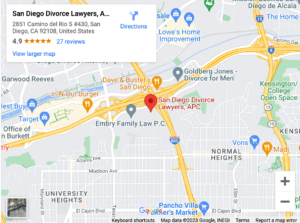
We proudly serve throughout San Diego County. We are located in San Diego, California.
San Diego Divorce Lawyers, APC
2851 Camino del Rio S #430
San Diego, CA 92108
(619) 866-3756