
Puja Sachdev | November 18, 2026 | Child Support

A key California child support change took effect on January 1, 2026, under Senate Bill 343. Local child support agencies can no longer seek new orders based on a blanket assumption that a parent earns minimum wage for 40 hours each week. Instead, agencies must use a parent’s actual income when it can be established or assess earning capacity based on available evidence when actual income cannot be determined.
However, this does not mean every parent’s payment automatically changes. Some related reforms took effect earlier, so it is important to understand which changes apply to your case.
What Replaced the Old Presumed Income Rule?
Previously, an agency could use presumed full-time minimum-wage income when a parent’s income was unknown. That approach could produce an order that did not reflect the parent’s circumstances.
Under the new rules, an agency generally must use actual income when sufficient evidence establishes that it is available. When a parent’s income is unknown, the agency must follow the required procedures to determine income or to establish an appropriate earning capacity figure based on available evidence. It cannot simply assume that the parent works a minimum of 40 hours a week at minimum wage.
Earning capacity can also be used when evidence shows that a parent can earn more than their current income. In other words, reporting low earnings does not necessarily mean the court must calculate support using that figure.
How Does California Determine What a Parent Can Earn?
Earning capacity means what a parent can reasonably earn based on their circumstances. It requires more than deciding that someone should simply get a better-paying job.
Relevant information can include things like:
- The parent’s work history and previous earnings
- Education and job skills
- Health conditions that limit employment
- Available jobs in the local area
- Other barriers to finding work
For example, a parent with a medical condition may be unable to perform the same work they did before. Evidence of that limitation helps the court evaluate earning capacity more accurately.
Under the 2026 procedures, certain proposed support orders based on earning capacity require a court hearing before judgment can be entered. Parents should still respond to their court papers rather than assume the hearing requirement protects them without participation.
Did California Also Change Its Child Support Formula?
Yes, but the major guideline changes under SB 343 began on September 1, 2024. Those reforms revised the statewide formula and expanded the low-income adjustment.
They also changed how certain additional child-related expenses are allocated between parents. These earlier changes continue to matter in 2026, but they should not be confused with the new procedures for agency cases.
California still considers both parents’ incomes and how much time the child spends with each parent. There is no single payment amount that applies to every family.
Will My Existing Child Support Order Change Automatically?
Generally, no. Continue following the current order unless it is changed through the proper legal process.
If your financial circumstances have changed, you can request a review through your local child support agency or ask the court to modify support. Acting promptly matters because an ordinary modification generally cannot reach back before the request was filed.
Certain default judgments based on presumed income and earning capacity may qualify for a separate set-aside process as well. That means asking the court to cancel the judgment and recalculate support; note that eligibility requirements and deadlines apply.
Contact the San Diego Child Support Attorneys at San Diego Divorce Lawyers, APC for Help Today
California’s 2026 child support changes may affect how a parent’s income is evaluated, but they do not guarantee a higher or lower payment. Understanding the rules and gathering accurate financial evidence can help protect your interests.
At San Diego Divorce Lawyers, APC, our San Diego child support lawyers can help you evaluate your circumstances, address income disputes, and pursue appropriate child support orders or modifications. Contact us today at (619) 866-3756 to schedule a complimentary case evaluation and discuss your options.
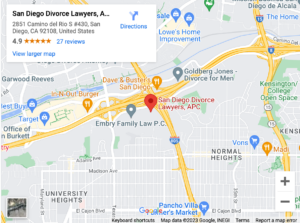
We proudly serve throughout San Diego County. We are located in San Diego, California.
San Diego Divorce Lawyers, APC
2851 Camino del Rio S #430
San Diego, CA 92108
(619) 866-3756