
Puja Sachdev | January 15, 2026 | Domestic Violence

Restraining orders are used in family law cases to protect individuals from abuse, harassment, and threats of violence. Many wonder whether these orders are public record. The answer depends on several factors, including the nature of the case and whether the records were sealed or kept confidential.
What Is a Restraining Order?
In family law, a restraining order is a court-issued order designed to protect one individual from harm or harassment by another.
The most common types of restraining orders in California family courts include:
- Domestic violence restraining orders are issued in cases involving intimate partners, spouses, cohabitants, or close family members where there is abuse or threats of abuse.
- Civil harassment restraining orders are used when the parties do not have a close personal relationship (e.g., neighbors, roommates, or acquaintances).
- Emergency protective orders are short-term orders issued in urgent situations involving domestic violence.
These orders may prohibit contact, require one party to move out of a shared residence, or include orders relating to child custody and visitation, among other things.
Court Records Are Generally Public Records
In California, most court records are considered public records. This means that unless a court has ordered that court documents remain confidential, members of the public can inspect and request copies of documents filed in a case.
The California Rules of Court govern the public’s access to documents as follows:
- Rule 2.400(a) states that all papers in court files may be inspected by the public at the office of the clerk, unless confidential or sealed.
- Rule 2.550(a) says that court records are presumed to be open to the public, unless a law or court order specifically makes them confidential.
Therefore, members of the public are generally able to search court records and obtain information about a restraining order case, including the names of the parties involved and the outcome of the hearing.
When Restraining Orders Might Not Be Public
In certain cases, courts may seal or restrict access to records related to a restraining order to protect the privacy and safety of those involved.
Circumstances that might lead to restricted records include:
- Restraining orders involving minors, especially in dependency or delinquency court, are typically confidential.
- A party may request that the court seal certain documents, such as medical records or sensitive information.
- Victims of domestic violence may use a confidential address through the Safe at Home program, preventing public access to their home address.
In rare cases, such as those involving child protective services or adoptions, the entire file may be sealed. To seal records, a party must usually file a formal motion with the court and demonstrate a compelling interest in privacy that outweighs the public’s right to access.
How To Search for a Restraining Order in California
If you’re looking to find out whether a restraining order exists in San Diego or elsewhere in California, you have a couple of options.
Many California courts, including the San Diego Superior Court, offer online portals where the public can search for civil and family law cases by party name or case number. You can also request to view court files in person at the clerk’s office during business hours. You should bring valid identification and any known case details.
If a record is sealed or confidential, the court will not release the information without a court order or unless you are a party to the case.
A San Diego Family Law Attorney Can Help
If you are involved in a restraining order case in San Diego, California, and are concerned about privacy (or if you’re trying to locate court records), you should consult a knowledgeable family law attorney who can guide you through your options and help protect your legal interests.
Contact our experienced San Diego divorce lawyers at San Diego Divorce Lawyers, APC, today for legal assistance. Contact us at (619) 866-3756 to schedule a complimentary case evaluation.
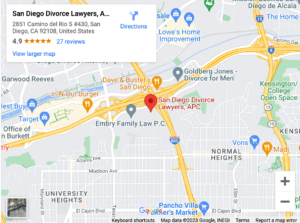
We proudly serve throughout San Diego County. We are located in San Diego, California.
San Diego Divorce Lawyers, APC
2851 Camino del Rio S #430
San Diego, CA 92108
(619) 866-3756