Puja Sachdev | January 15, 2026 | Child Custody

Child custody disputes are some of the hardest cases California family courts handle. When a judge decides who will care for a child, their focus is always on the child’s best interests, not either parent’s wishes.
While courts generally want both parents to play an active role, there are situations where a parent can lose custody altogether. This usually happens when a parent’s behavior threatens the child’s well-being. Learning about these situations can help you avoid costly mistakes and protect your parental rights.
How California Courts Decide Custody
Under California Family Code § 3011, courts must consider what arrangement best serves the child’s health, safety, and welfare.
Judges review many factors when making custody decisions, including:
- Each parent’s ability to provide stable housing and care
- The child’s relationship with both parents
- Any history of domestic violence
- Evidence of substance abuse
- The child’s needs and wishes, depending on their age and maturity
If a parent’s actions put the child at risk, the court can modify the existing custody order or, in some cases, grant full custody to the other parent.
Abuse and Neglect
Physical abuse, emotional abuse, and neglect are among the most common reasons a California parent can lose custody. Neglect can include failing to provide essential items such as food, medical care, and education.
When these issues are reported, the court may order a child custody evaluation and involve Child Protective Services (CPS). Judges take these findings seriously. If the court determines that a child has been placed in danger, it can order supervised visitation as well as revoke custody altogether.
A single confirmed incident of abuse may lead to substantial changes in custody, depending on the severity of the situation.
Domestic Violence
California courts treat domestic violence as a major red flag in custody cases. This applies even if the violence was not directed at the child. Exposure to violence can be traumatic and cause long-term emotional harm.
Under California Family Code § 3044, if a court finds the parent committed domestic violence within the last five years, the court presumes that granting them custody would not be in the child’s best interests. The parent can try to overcome that presumption, but the burden is high.
Judges may also issue orders of protection and take other steps to ensure the child’s safety.
Substance Abuse
Ongoing drug and/or alcohol abuse can also lead to loss of custody. The court’s concern is not occasional use. Rather, it is whether the parent’s behavior interferes with their ability to care for the child.
Evidence such as prior DUI arrests and criminal convictions related to substance use can persuade a judge that the child’s safety is at risk. Parents who demonstrate sobriety and progress through treatment programs may eventually regain custody. However, repeated violations can result in long-term restrictions.
Mental Health Issues
Mental illness alone is not a reason to lose custody in California. However, if a parent’s mental health condition prevents them from providing consistent care for the child, the court may intervene.
The judge will typically review medical records and testimony from mental health professionals in these cases. Courts often prefer to keep families together when possible. That said, if the parent’s condition remains unstable, custody may be transferred to protect the child’s well-being.
Criminal Activity
A parent who engages in criminal behavior may also lose custody of their child. Long periods of incarceration make it difficult to maintain regular contact, and courts may elect to prioritize the child’s need for stability and safety.
Nonviolent offenses can still have an impact on these matters if they, for instance, reflect an unsafe living environment. In some cases, the court may limit visitation until the parent shows rehabilitation.
Parental Alienation and Interference
California courts strongly favor arrangements that allow the child to have a meaningful relationship with both parents. When one parent, for example, repeatedly tries to turn the child against the other parent, it can backfire.
This type of behavior, known as parental alienation, shows the court that the parent is not acting in the child’s best interests. Judges can issue sanctions and may sometimes award full custody to the other parent if alienation continues.
Unsafe Living Conditions
A parent can lose custody if their home environment is unstable. This might include factors like unsanitary conditions, exposure to illegal activities, and lack of adequate housing. The court may order home inspections and require proof that the parent can provide a secure space for the child.
If the conditions cannot be corrected within a reasonable time, custody may be transferred. In some cases, the court may encourage the parent to make necessary improvements and revisit the custody issue later.
Abandonment
A parent who consistently fails to spend time with their child or provide financial support can lose custody due to abandonment. California law allows judges to consider a parent’s involvement in the child’s life. This includes not just physical presence but participation in overall daily care.
When a parent stops communicating (or disappears altogether) for an extended period without reason, the court may conclude that maintaining custody is no longer in the best interests of the child.
Termination of Parental Rights
Losing custody is not the same as losing parental rights. However, in the most extreme cases, the court can terminate parental rights entirely.
Once terminated, the parent no longer has legal authority or responsibilities toward the child. This step may be irreversible and generally occurs only when some form of long-term guardianship is being considered.
Contact the San Diego Child Custody Attorneys at San Diego Divorce Lawyers, APC for Help Today
If you believe your custody rights are at risk, it’s important to act quickly. That’s where San Diego Divorce Lawyers, APC can help.
Our San Diego child custody lawyers can guide you through the legal process and help you pursue the best possible outcome under the law.
Contact our experienced San Diego child custody lawyers at San Diego Divorce Lawyers, APC, today for legal assistance. Contact us at (619) 866-3756 to schedule a free consultation.
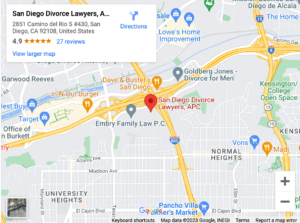
We proudly serve throughout San Diego County. We are located in San Diego, California.
San Diego Divorce Lawyers, APC
2851 Camino del Rio S #430
San Diego, CA 92108
(619) 866-3756