
Puja Sachdev | July 4, 2026 | Child Custody

If you are going through a divorce in California, you will need to complete and serve a declaration of disclosure as part of the process. This is a mandatory step in every case, regardless of how much you own or how long you have been married because the court will not finalize your divorce until it is done.
Despite how important this step is, many people are not sure what it involves or what the rules are. Below are answers to some of the most frequently asked questions (FAQs) about the declaration of disclosure in a California divorce.
What Is a Declaration of Disclosure?
A declaration of disclosure is a set of financial documents that each spouse must share with the other during the divorce process. It gives both sides a clear picture of what is owned, what is owed, and what each person earns. California is a community property state, which means most assets and debts from the marriage are divided equally. The only way for that division to be fair is if both spouses put all of their financial information on the table.
There are two rounds of disclosure in a California divorce. The first is called the preliminary declaration of disclosure; the second is the final declaration of disclosure. Each one serves a different purpose and follows its own set of rules.
What Forms Are Required?
The disclosure packet includes several forms that must be filled out completely and signed under penalty of perjury:
- Form FL-140: This is the declaration of disclosure itself and serves as a cover sheet for the rest of the packet.
- Form FL-142: Known as the Schedule of Assets and Debts, this form lists everything you own and everything you owe.
- Form FL-150: This is the Income and Expense Declaration, which details your current earnings and overall financial situation.
You should also include copies of your federal and state income tax returns for the previous two years, if required.
Once you have served these documents on your spouse, you will file a separate form with the court called the Declaration Regarding Service (Form FL-141). This confirms that you met your obligation to share your financial information. The disclosure forms themselves are not filed with the court and are only exchanged between the spouses.
When Is the Declaration of Disclosure Due?
The deadlines depend on your role in the case:
- If you are the petitioner (the spouse who filed for divorce), your preliminary disclosure must be served within 60 days of filing your petition.
- If you are the respondent (the spouse who received the divorce papers), your preliminary disclosure is due within 60 days of filing your response.
These deadlines are firm, meaning courts rarely grant extensions without a compelling reason. Starting the process early and gathering your financial records ahead of time can save you a lot of stress down the road.
What Is the Difference Between Preliminary and Final Disclosures?
The preliminary declaration of disclosure provides an initial snapshot of each spouse’s finances at the beginning of the case. It does not need to be perfect, but it does need to be thorough and honest based on the information you have at the time.
The final declaration of disclosure comes later in the process and provides updated financial information before the divorce is finalized. This ensures both sides are working from current numbers when they sign a settlement agreement or go before a judge.
Can the Declaration of Disclosure Be Waived?
This depends on which disclosure you are asking about. The preliminary declaration of disclosure cannot be waived under any circumstances. It is required in every single California divorce case.
The final declaration of disclosure, on the other hand, can be waived if both spouses agree to skip it. To do this, you and your spouse must sign and file a Stipulation and Waiver of Final Declaration of Disclosure (Form FL-144). This is common in uncontested divorces where both parties have stayed up to date on each other’s financial situation throughout the process.
What Happens if I Do Not Complete My Disclosure?
Failing to complete your disclosure on time or leaving out important financial information can create serious problems for your case.
Potential consequences include:
- Your divorce cannot be finalized until the disclosure requirements are met, which can cause significant delays
- The court may order you to pay monetary sanctions or cover your spouse’s attorney’s fees
- If it is later discovered that you failed to disclose an asset, the court has the authority to set aside part or all of the divorce judgment
- In some cases, the noncompliant spouse may lose their right to the undisclosed asset entirely
The bottom line is that California courts take this requirement very seriously. Cutting corners on your disclosure is one of the easiest ways to create costly legal problems for yourself after the divorce is already done.
Contact Our San Diego Divorce Attorneys at San Diego Divorce Lawyers, APC for Help Today
The declaration of disclosure is just one piece of the divorce process in California, but getting it right matters more than many people realize. If you need help making sure everything is in order, San Diego Divorce Lawyers, APC can help. Speaking with our experienced San Diego divorce lawyers can help you avoid mistakes that could affect the outcome of your case down the line.
Schedule a free consultation today at (619) 866-3756 to get started.
We proudly serve throughout San Diego County. We are located in San Diego, California.
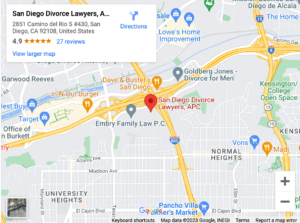
San Diego Divorce Lawyers, APC
2851 Camino del Rio S #430
San Diego, CA 92108
(619) 866-3756