Puja Sachdev | October 3, 2025 | Child Custody

Navigating child custody arrangements can be complicated. An additional layer of complexity arises when parents reside in different states. Here is what you need to know about child custody if parents live in different states.
Can Parents Share Custody Across State Lines?
Courts in California and other states generally prefer joint custody arrangements, which allow both parents to share legal or physical custody:
- Legal custody means both parents have decision-making rights about the child’s education, health care, and upbringing.
- Physical custody refers to where the child lives day to day.
When parents live in different states, joint legal custody is possible, but joint physical custody is usually impractical. A child cannot reasonably attend school in two states at once, and frequent long-distance travel may disrupt their stability.
Instead, courts often award one parent primary custody based on the child’s best interests. The other parent typically receives visitation rights, which may include extended summer visits, school holidays, or other long breaks. If parents live close to a state border, more traditional timesharing may be feasible.
Moving Out of State With a Child
California law gives both parents equal custody rights. This means one parent cannot unilaterally move a child out of state without either:
- The other parent’s consent, or
- Court approval.
If a parent moves without permission, a judge can order the child to be returned to California. Courts take these violations seriously, since relocation can dramatically affect custody rights and the child’s well-being.
The Role of the UCCJEA
The Uniform Child Custody Jurisdiction and Enforcement Act (UCCJEA) helps resolve custody disputes when parents live in different states. Nearly every state, including California, has adopted it.
The UCCJEA determines:
- Which state has jurisdiction over a child custody case.
- Which court can issue orders in multi-state custody disputes.
- When one state can modify another state’s custody order.
- How out-of-state custody orders can be registered and enforced.
- When courts can issue temporary emergency orders to protect children.
- How jurisdiction can be transferred between states.
In most cases, the child’s “home state” — where they have lived for the past six months — has primary jurisdiction.
Reaching Custody Agreements Out of Court
Even when parents live in different states, courts encourage them to work together on custody arrangements. Options include:
- Direct communication between parents.
- Negotiation through attorneys.
- Mediation with a neutral third party.
Parents who can reach an agreement often save time, money, and emotional stress. If no agreement is possible, the court decides custody based on the child’s best interests.
Do You Need a Child Custody Lawyer?
Some custody matters can be resolved without legal help, but multi-state custody disputes are rarely straightforward. The UCCJEA, relocation laws, and jurisdictional rules make these cases especially complex.
A skilled child custody lawyer can:
- Explain how the law applies to your situation.
- File the necessary paperwork in the correct jurisdiction.
- Represent you in hearings and negotiations.
- Protect your parental rights if the other parent tries to relocate your child without consent.
- Help you pursue modifications or enforcement of out-of-state orders.
Having a child custody lawyer ensures your rights are protected and helps you navigate the system without costly mistakes.
Protecting Your Rights in Interstate Child Custody Cases
When parents live in different states, child custody cases become more complicated but not impossible to resolve. Courts prioritize stability for the child while balancing parental rights. Whether through negotiation or litigation, having the right guidance is essential.
If you are facing an interstate custody dispute, contact an experienced California child custody lawyer to discuss your options and protect your parental rights. Contact San Diego Divorce Lawyers, APC today to schedule a complimentary case evaluation. Call us at (619) 866-3756
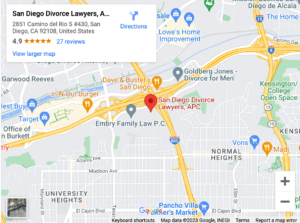
We proudly serve throughout San Diego County. We are located in San Diego, California.
San Diego Divorce Lawyers, APC
2851 Camino del Rio S #430
San Diego, CA 92108
(619) 866-3756